
What Is Entertainment Design?
Great celebrations don't just happen.
Great celebrations are designed.
Entertainment Design is the intentional process of shaping how guests experience an event through atmosphere, energy, timing, aesthetics, hospitality, production, and entertainment.
For years, many event professionals have viewed entertainment primarily through the lens of music. While music is one of the most powerful tools we have, it is only one piece of a much larger system.
The most memorable celebrations are rarely defined by a single song, a beautiful centerpiece, or a stunning venue. They are defined by how all of those elements work together to create a feeling.
The lighting influences the atmosphere.
The room layout influences the energy.
The timeline influences the flow.
The entertainment influences the emotion.
Every decision affects the guest experience.
Entertainment Design is the philosophy that these elements should not be treated as separate parts of an event. They should be intentionally designed to work together as one cohesive experience.
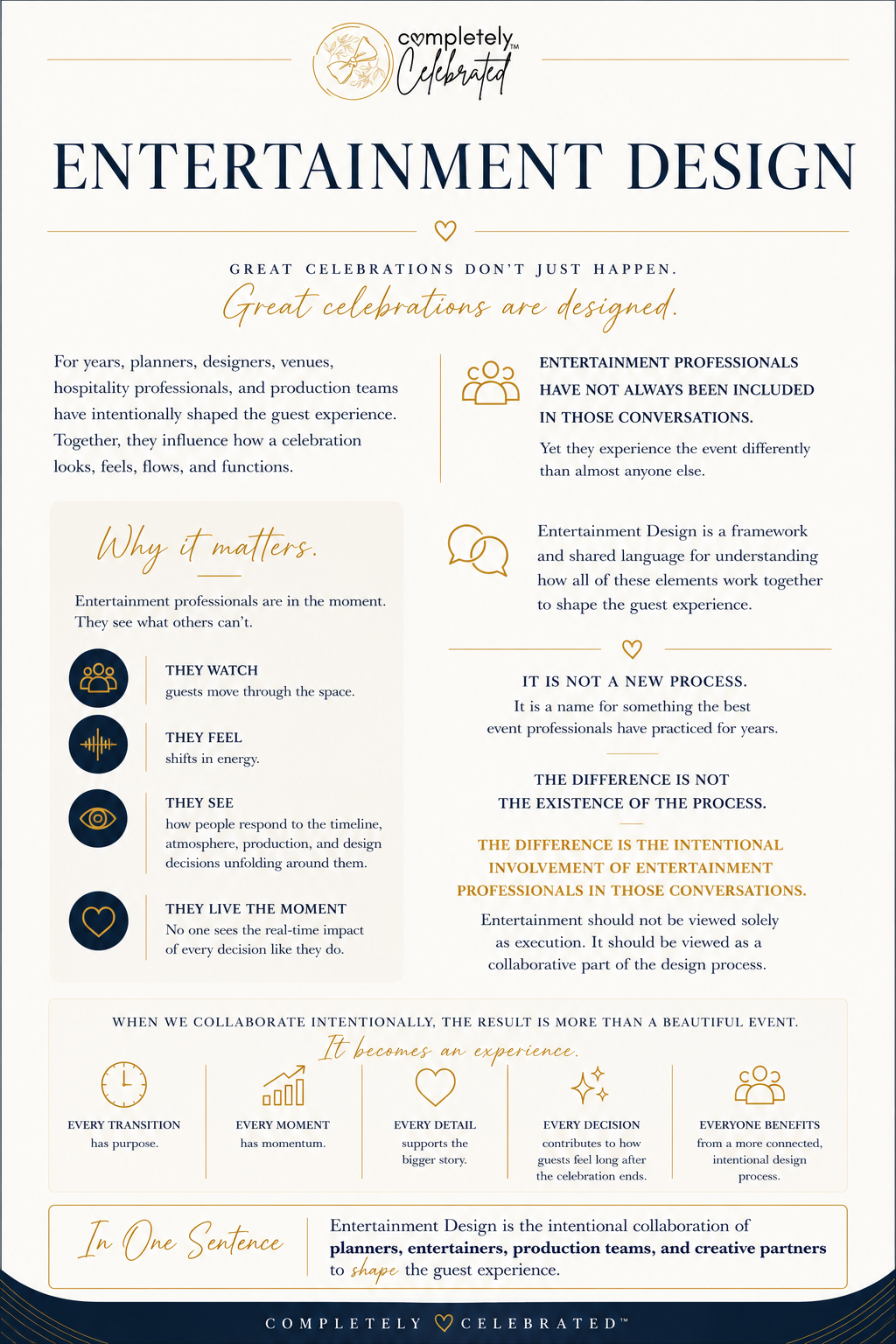
A Perspective Shaped by Experience
After more than fifteen years entertaining weddings, galas, fundraisers, and corporate events, I began noticing something interesting.
The celebrations guests talked about most weren't necessarily the ones with the biggest budgets.
They weren't always the events with the most elaborate production.
They weren't even the celebrations with the most packed dance floors.
The experiences people remembered most were the ones where every moment felt intentional.
The timeline flowed naturally.
Guests felt welcomed.
Transitions felt seamless.
The atmosphere felt effortless.
The energy never seemed forced.
Over time, I realized those events had something in common.
They weren't successful because of any one element.
They were successful because every element worked together.
Great celebrations don't just happen.
Great celebrations are designed.
That realization eventually became the foundation of Entertainment Design.
Today, whether we're talking about a wedding, a gala, a fundraiser, or a corporate event, the goal remains the same:
To create an experience that feels intentional, memorable, and effortless for every guest in the room.
The Difference Between an Event and an Experience
Every event has a timeline.
Every event has a venue.
Every event has food, drinks, entertainment, and logistics.
Yet some experiences become unforgettable while others quietly fade from memory.
Why?
Because people rarely remember the schedule.
They remember how they felt.
They remember anticipation.
Connection.
Joy.
Energy.
The feeling of being welcomed into something meaningful.
The difference between an event and an experience is not what happens.
It's how people experience what happens.
And that experience can be designed.
The most memorable celebrations aren't necessarily the most expensive.
They aren't necessarily the most elaborate.
They aren't necessarily the most unique.
They're the ones where every element works together to create a feeling.
A thoughtful timeline.
An inviting atmosphere.
Meaningful hospitality.
Intentional entertainment.
Seamless transitions.
Every decision contributes to the overall experience.
Because guests don't remember every detail.
They remember how the experience made them feel.
The best celebrations understand that people are not simply attending an event.
They're becoming part of a story.
And every great story is intentionally designed.
The Invisible Architecture of Great Celebrations
Think about the best celebration you've ever attended.
Not the prettiest.
Not the most expensive.
The one that felt the most alive.
Chances are, you remember a feeling before you remember a detail.
That's because every successful celebration has an invisible architecture.
A rhythm.
A flow.
A sequence of moments intentionally connected together.
Guests arrive and immediately feel welcomed.
A ceremony creates emotional investment.
A cocktail hour encourages connection.
Dinner provides comfort and conversation.
Shared moments create collective energy.
The dance floor becomes a release.
None of these moments exist independently.
They build upon one another.
The energy created in one moment influences the next.
This is where Entertainment Design begins.
Not with music.
But with intention.
The most memorable celebrations understand a simple truth:
Every moment influences the next.
When transitions feel awkward, guests notice.
When momentum disappears, guests notice.
When experiences feel disconnected, guests notice.
But when every element works together seamlessly, guests stop noticing the logistics altogether and become immersed in the experience.
That's why thoughtful planning matters.
It's why collaboration matters.
And it's why the most successful celebrations are created by teams of professionals working toward a shared vision.
The invisible architecture of a great celebration isn't built from a checklist.
It's built from intentional decisions that guide guests through an experience they'll remember long after the event ends.
Hospitality Is the Foundation of Experience
One of the biggest misconceptions in the event industry is that entertainment begins when dancing begins.
In reality, entertainment begins the moment a guest arrives.
Long before the first dance.
Long before the first toast.
Long before the first song fills the room.
Guests are already forming impressions.
Do I feel welcome here?
Do I know where I'm supposed to go?
Do I feel comfortable?
Do I feel included?
Do I feel like I'm part of something special?
Hospitality answers those questions.
And hospitality creates trust.
When guests feel comfortable, they engage.
When they engage, they participate.
When they participate, they contribute energy.
The dance floor often begins with hospitality.
Not music.
Think about your favorite restaurant.
Your favorite hotel.
Your favorite concert venue.
The best experiences don't begin when the main event starts.
They begin the moment you walk through the door.
Someone anticipated your needs.
Someone thought about how you would navigate the space.
Someone considered how you would feel.
The same is true for celebrations.
A warm welcome.
Clear direction.
Thoughtful communication.
Comfortable spaces.
Intentional pacing.
These details may seem small on their own, but together they shape the guest experience.
The most successful celebrations understand that guests who feel comfortable are far more likely to participate.
They're more likely to engage in conversation.
More likely to laugh during speeches.
More likely to stay present during meaningful moments.
And yes, more likely to join the dance floor later in the evening.
Hospitality is often viewed as separate from entertainment.
We believe it's the foundation of it.
Because before guests can celebrate, they need to feel welcomed.
And before they can feel welcomed, someone has to intentionally design that experience.
The best celebrations don't ask guests to create the energy.
They create an environment where energy naturally emerges.
Designing Energy
Every celebration has energy.
The question is whether that energy is being intentionally designed.
Great celebrations are not a constant crescendo.
Just like great films, great concerts, and great stories, celebrations need contrast.
Moments of anticipation.
Moments of reflection.
Moments of excitement.
Moments of release.
The goal is not maximum energy.
The goal is the right energy at the right time.
This is one of the most overlooked aspects of event design.
And one of the most important.
Many people say they want their celebration to be fun.
It's one of the most common goals in our industry.
But fun isn't a timeline item.
Fun isn't a lighting package.
Fun isn't a playlist.
Fun is the result of dozens of intentional decisions working together.
The excitement of seeing guests arrive.
The emotional investment created during a ceremony or opening moment.
The conversations shared during a cocktail hour or social gathering.
The anticipation leading into a grand entrance.
The laughter during dinner.
The collective attention during speeches.
The release of energy when the dance floor opens.
Every moment influences the next.
This is why Entertainment Design focuses so heavily on pacing.
Energy should feel natural.
Not forced.
Guests should never feel exhausted.
They should never feel bored.
They should feel carried through the experience.
The best celebrations create a rhythm that keeps guests engaged from beginning to end.
Music plays an important role in this process, but music alone cannot create energy.
The right song played at the wrong moment can feel disconnected.
The right song played at the right moment can become unforgettable.
The same is true for every element of an event.
Lighting influences mood.
Room layout influences interaction.
Staging influences focus.
Atmosphere influences behavior.
Every decision contributes to the energy of the room.
The most memorable celebrations aren't necessarily the loudest.
They're the ones where guests remain emotionally connected throughout the experience.
Because energy isn't something that simply happens.
It's something that can be intentionally designed.
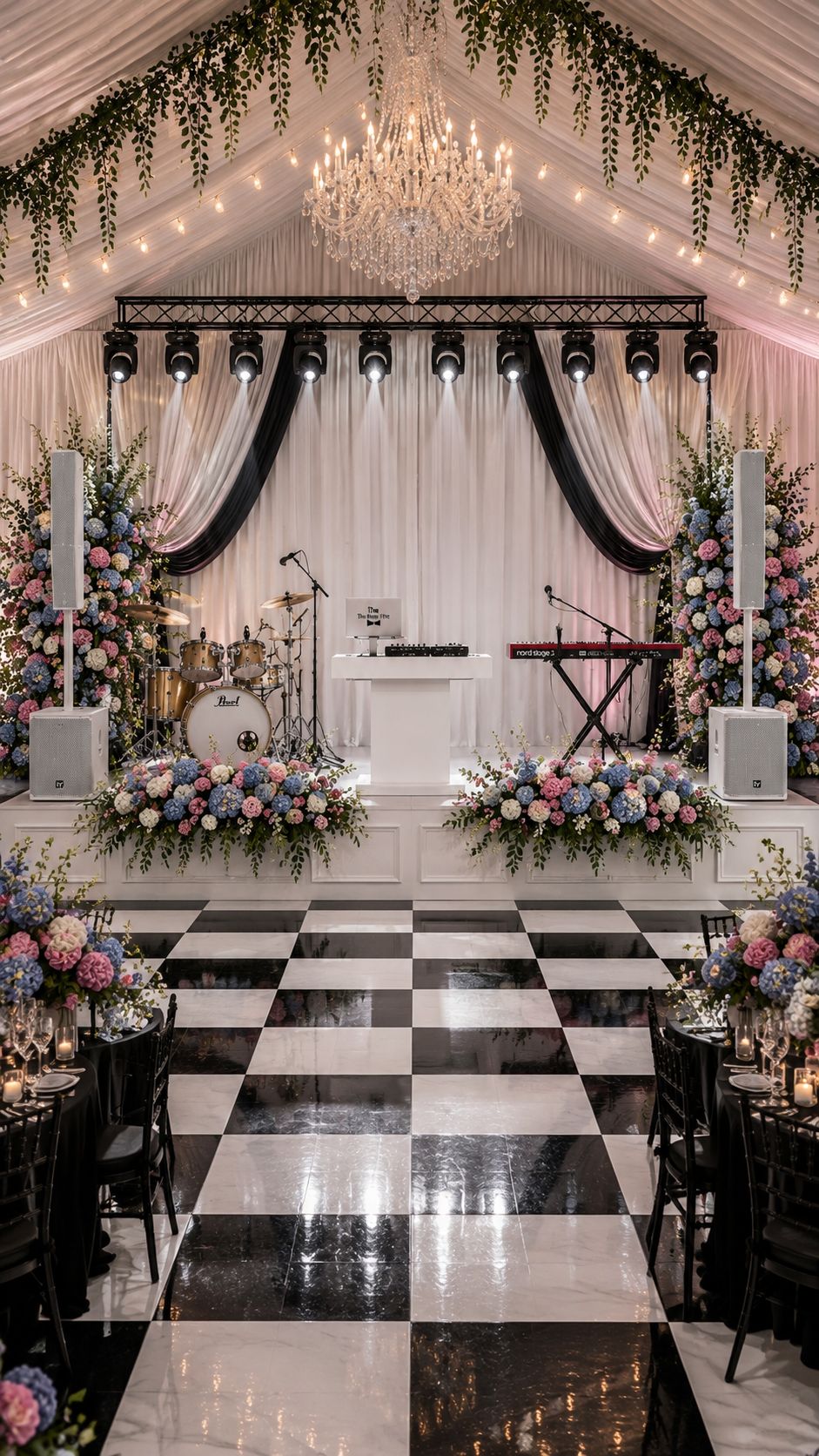
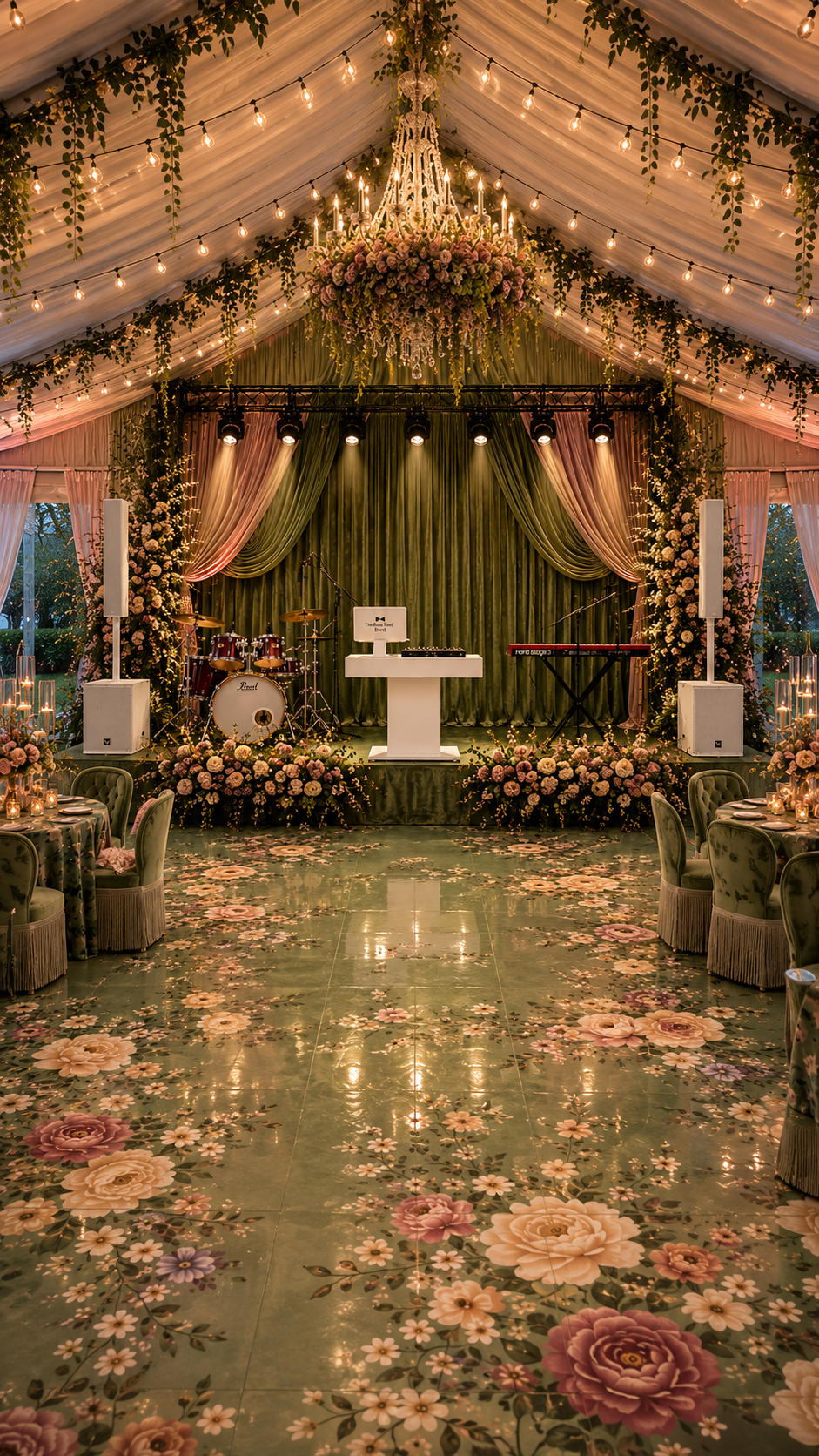
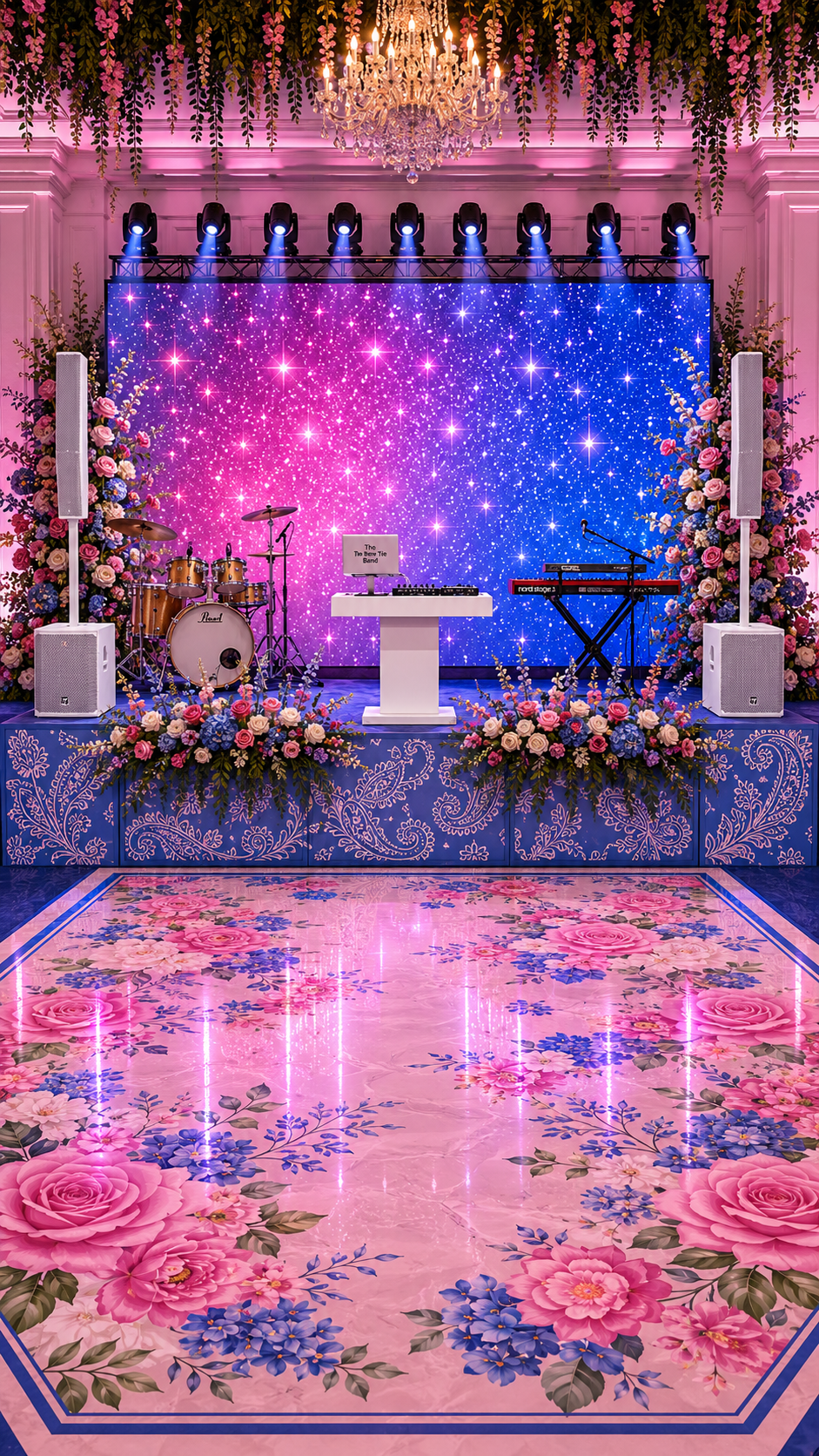
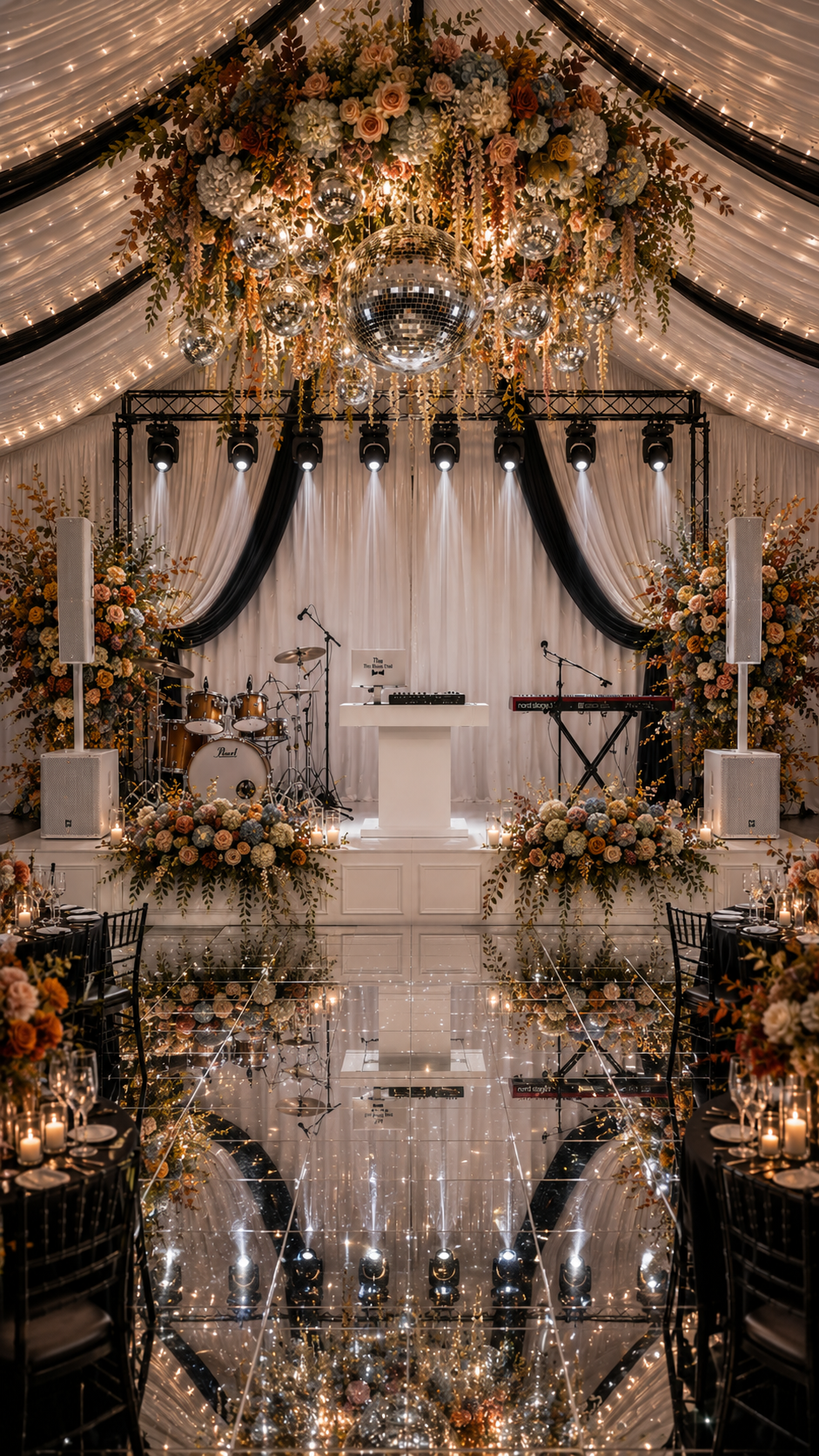
These are AI-generated concept renderings created to help visualize Entertainment Design.
Why Guidance Matters
One of the most influential and misunderstood elements of a successful celebration is guidance.
Many people think of a host as someone who makes announcements.
Someone who introduces speakers.
Someone who tells guests what happens next.
The best hosts do far more than that.
They create clarity.
They build anticipation.
They connect moments together.
They help guests understand not only what is happening, but why it matters.
Without guidance, even beautiful celebrations can feel disconnected.
Guests begin asking questions.
What's happening next?
Where are we supposed to go?
Why are we waiting?
Who is speaking?
Small moments of uncertainty can quietly diminish momentum.
Strong guidance eliminates that uncertainty.
It creates confidence.
It creates comfort.
It creates flow.
The goal of a great host is not to become the center of attention.
The goal is to direct attention toward the people and moments that matter most.
The best hosting often goes unnoticed because it feels natural.
Guests aren't thinking about the person holding the microphone.
They're focused on the experience unfolding around them.
That's exactly the point.
A thoughtful introduction can elevate a room.
A well-timed announcement can maintain momentum.
A carefully delivered transition can prevent energy from disappearing between moments.
These seemingly small interactions have an outsized impact on the guest experience.
The most memorable celebrations don't feel like a series of disconnected events.
They feel like a story.
And every great story benefits from someone thoughtfully guiding the audience through it.
Not to command attention.
But to direct it.
Because the role of a great host isn't to become part of the experience.
It's to help others experience it more fully.
Atmosphere Is Not Decoration
Walk into a room before an event begins.
No music.
No guests.
No introductions.
No dancing.
Yet the room already says something.
The lighting communicates a mood.
The layout influences how people will interact.
The architecture creates expectations.
The décor establishes a sense of occasion.
Before a single word is spoken, guests begin forming impressions.
Atmosphere is communication.
And every design decision contributes to it.
One of the most overlooked truths in event design is that environments influence behavior.
People respond differently in a grand ballroom than they do in a vineyard.
They behave differently in a modern industrial space than they do in a historic estate.
The room itself becomes part of the experience.
Lighting changes energy.
Room layouts influence conversation.
Production shapes focus.
Sound affects emotion.
Every element contributes to how guests feel.
This is why Entertainment Design extends beyond music.
Because music does not exist in a vacuum.
The same song can create an entirely different experience depending on the environment in which it's played.
A beautifully designed space can elevate a simple moment.
A poorly designed space can diminish an extraordinary one.
The best celebrations understand this relationship.
Entertainment.
Hospitality.
Production.
Design.
Atmosphere.
They are not separate conversations.
They are connected parts of the same experience.
The most memorable events don't simply look beautiful.
They feel intentional.
Guests may never consciously identify why.
But they'll remember how the room made them feel.
And that's what matters.
Because atmosphere is not decoration.
Atmosphere is experience.
Flow Is the Invisible Luxury
Guests rarely compliment flow.
But they always notice when it's missing.
They notice when they're standing around wondering what happens next.
They notice when a room feels disorganized.
They notice when momentum disappears.
They notice when transitions feel awkward.
What they rarely realize is that many of their favorite celebrations felt effortless because someone intentionally designed them that way.
Luxury is often defined by what guests don't have to think about.
They don't have to wonder where they're going.
They don't have to wonder what's happening next.
They don't have to wonder why there's a delay.
They don't have to wonder whether they're supposed to be doing something.
Everything simply feels natural.
A ceremony concludes.
Guests seamlessly transition into a social gathering.
Dinner begins without confusion.
Formalities feel purposeful.
The dance floor opens at exactly the right moment.
Nothing feels rushed.
Nothing feels delayed.
Everything feels intentional.
This is the power of flow.
It's the invisible thread connecting every moment of a celebration.
When flow is working, guests remain present.
They're focused on the experience.
They're engaged with the people around them.
They're immersed in the story unfolding before them.
When flow breaks down, guests become aware of logistics.
And the moment guests start thinking about logistics, they're no longer fully experiencing the celebration.
This is why transitions matter so much.
Not because they're dramatic.
But because they're often the moments that determine whether energy grows or disappears.
The most memorable celebrations understand that momentum is precious.
Every transition either strengthens it or weakens it.
Every decision either reinforces the guest experience or distracts from it.
Great celebrations don't simply consist of memorable moments.
They consist of memorable moments connected by intentional transitions.
Guests remember moments.
Event professionals remember transitions.
Because while guests may never compliment the flow of an event, they will always remember how the experience felt.
And more often than not, what they're remembering is flow.
Beyond the Dance Floor
For decades, event entertainment has often been measured by a single question:
Was the dance floor packed?
It's not a bad question.
In fact, it's often an important one.
A full dance floor is usually a sign that guests are engaged, comfortable, and having fun.
But it's also an incomplete measure of success.
Because the best celebrations create memorable experiences long before the dance floor opens.
They create anticipation during opening moments.
Connection during social gatherings.
Laughter during dinner.
Emotion during speeches.
Excitement during introductions.
Moments of surprise.
Moments of reflection.
Moments of joy.
The dance floor may become one of the highlights of the event.
But it is only one chapter of a much larger story.
This is where traditional thinking about entertainment begins to fall short.
When entertainment is viewed exclusively through the lens of music, success becomes tied to a single outcome.
How many people danced?
How long did they stay?
How full was the floor?
Entertainment Design asks a different question.
How did people experience the celebration?
Did they feel welcomed?
Did they feel included?
Did they feel connected?
Did they feel engaged?
Did they leave with stories they'll tell for years?
Because when people talk about a memorable event afterward, they're rarely discussing technical details.
They're talking about moments.
The heartfelt speech that made the room laugh and cry.
The unexpected interaction that brought old friends together.
The energy in the room when everyone realized they were part of something special.
The feeling that they didn't want the night to end.
Those are the things people remember.
The dance floor matters.
Of course it does.
But great celebrations are about more than dancing.
They're about creating moments that people carry with them long after the event ends.
Great celebrations don't just happen.
Great celebrations are designed.
And that's where Entertainment Design begins to distinguish itself.
It's not about designing a dance floor.
It's about designing an experience.
Why Entertainment Design Matters
The event industry is constantly evolving.
Styles change.
Trends come and go.
Technology advances.
New traditions emerge.
Yet one thing remains remarkably consistent.
People gather to celebrate meaningful moments with the people they care about most.
What is changing is how people think about those experiences.
They're less interested in checking boxes.
Less interested in following conventions simply because they've always existed.
Less interested in creating an event that looks like everyone else's.
Instead, they're searching for experiences that feel authentic.
Personal.
Memorable.
Meaningful.
They're asking different questions.
Not just:
What will this event look like?
But:
How will it feel?
How will people experience it?
What moments will they remember?
What stories will they tell afterward?
These questions represent a shift.
A shift away from viewing events as collections of services.
And toward viewing them as experiences.
As that shift continues, the professionals who thrive will be the ones who think beyond individual disciplines.
Beyond playlists.
Beyond production packages.
Beyond timelines.
The future belongs to professionals who understand how experiences are created.
Professionals who recognize that music, hospitality, production, hosting, atmosphere, and flow are interconnected.
Professionals who can collaborate across disciplines.
Who can contribute to the guest experience from the earliest planning conversations through the final moments of a celebration.
This is why Entertainment Design matters.
Not because it's a new trend.
Not because it's a marketing phrase.
But because it gives language to something the best event professionals have always understood:
Great celebrations don't just happen.
Great celebrations are designed.
The Completely Celebrated™ Philosophy
At Completely Celebrated™, we believe great celebrations don't just happen.
Great celebrations are designed.
They are shaped through hospitality, atmosphere, flow, intentional transitions, thoughtful entertainment, and meaningful human connection.
Over the years, we've had the privilege of serving couples, families, organizations, and communities through weddings, galas, fundraisers, and corporate events.
While every celebration is different, the goal remains the same:
To create experiences that feel intentional, memorable, and effortless for every guest in the room.
That's what Entertainment Design means to us.
Not controlling every detail.
But thoughtfully shaping an environment where meaningful moments can happen naturally.
Because long after the flowers have been packed away, the tables have been cleared, and the last song has ended, what remains are the memories people created together.
And those memories deserve to be intentionally designed.
Continue Exploring Entertainment Design
Entertainment Design is a broad topic, and this guide represents only one part of the conversation.
Many of the ideas explored here have been discussed in greater depth throughout our website. If you'd like to continue exploring the philosophy, we recommend starting with Elevating Your Entertainment, which examines why entertainment is about far more than music alone.
You can also explore Your Entertainment Partnership for a closer look at how collaboration between planners, venues, and entertainment professionals shapes the guest experience, or Fun-Focused Coordination, which explores how thoughtful planning creates seamless celebrations.
For a deeper look at how couples are increasingly prioritizing authenticity and experience, visit Gen Z Wedding Trends. If you're interested in the future of celebrations, 5 Entertainment Design Concepts We'd Love to Bring to Life explores several ideas inspired by the Entertainment Design philosophy.
Music remains one of the most powerful tools within Entertainment Design, which is why we've also created resources like Curated Music Playlists and 25 Dance Party Songs from the 2000s You'll Want at Your Wedding.
Together, these articles explore how music, hospitality, atmosphere, production, hosting, and intentional planning work together to create unforgettable experiences.
Entertainment Design in Practice
Entertainment Design is more than a philosophy. It's the framework that guides every celebration we create.
Whether you're planning a wedding, gala, fundraiser, holiday party, or corporate event, our goal remains the same: creating intentional experiences that guests remember long after the event ends.
If you'd like to see how these principles come to life, explore our experiences:
From curated music and polished hosting to immersive production, staging, lighting, dance floors, and live musician enhancements through The Bow Tied Band™, every experience is designed around a single idea:
Great celebrations don't just happen.
Great celebrations are designed.